Is Our Universe Just One of Many? The Multiverse Theory
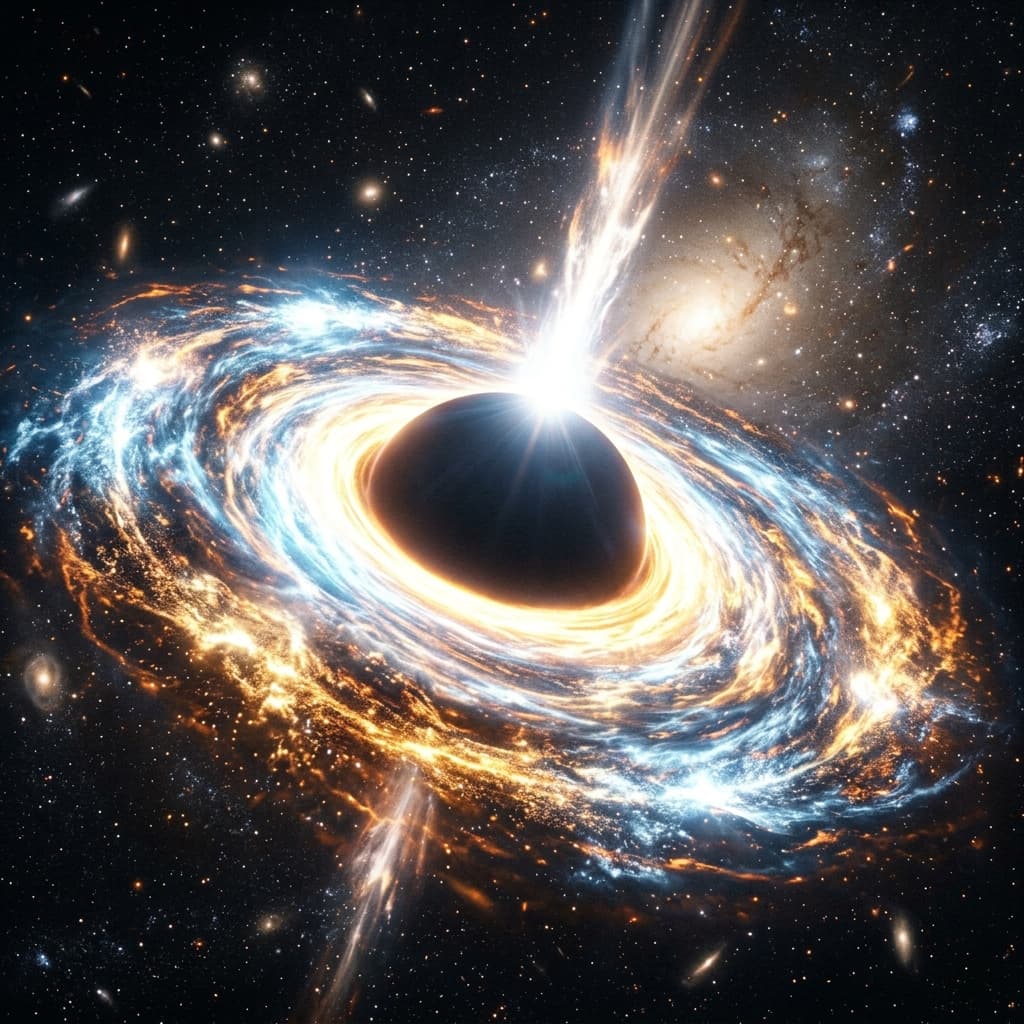
TL;DR Summary
Dive into the mind-bending physics of the Multiverse, from cosmic inflation to quantum mechanics and parallel dimensions.
The word "universe" implies everything that exists. But modern physics suggests that our universe—with its hundreds of billions of galaxies—might just be a single bubble in a vast, infinite cosmic foam.
Welcome to the Multiverse Theory. While it sounds like science fiction, the multiverse is a mathematical prediction that arises naturally from our current best theories of physics.
Level 1: The Infinite Quilted Multiverse
If space is infinite, then matter must eventually repeat. There is only a finite number of ways that particles can be arranged in a given volume of space.
In an infinitely large universe, every possible arrangement of matter must occur an infinite number of times. This means that somewhere out there, infinitely far away, there is an exact duplicate of our observable universe. There is another Earth, another you, reading this exact article right now.
Level 2: The Inflationary Multiverse
A fraction of a second after the Big Bang, space expanded exponentially—a process called Cosmic Inflation. While inflation ended in our local region (creating our observable universe), physicists like Alan Guth propose that in other regions, inflation never stops.
This "Eternal Inflation" creates a vast, endlessly expanding background space, within which "bubble universes" constantly pop into existence. Our universe is just one of these bubbles. Crucially, the laws of physics and the fundamental constants (like the speed of light or the strength of gravity) might be completely different in these other bubbles.
Level 3: The Quantum Many-Worlds
In quantum mechanics, particles can exist in multiple states simultaneously (superposition). But when we observe them, they "collapse" into a single state.
The Many-Worlds Interpretation, proposed by Hugh Everett in 1957, suggests that the waveform never collapses. Instead, every time a quantum event occurs, the universe splits. In one universe, the particle spins up; in another, it spins down. This implies an unfathomable number of parallel realities branching off every millisecond, representing every possible outcome of every decision ever made.
Can We Prove It?
Currently, the multiverse is unprovable because we cannot observe or interact with anything outside our own universe. However, if our universe collided with another bubble universe in the distant past, it might have left a "bruise" or a circular pattern in the Cosmic Microwave Background radiation.
Until we find such evidence, the multiverse remains the ultimate frontier of theoretical physics.